
Nairobi Health Connect
12 clinics unified on one platform
Billing reconciliation reduced from 3 days to same day
Duplicate test orders down by 40 percent
Over 8,000 active patient accounts on the mobile app
Insurance claim rejection rate down from 22 percent to 4 percent
Average appointment booking time reduced from 8 minutes to 90 seconds
What needed to change and why it mattered.
A group of 12 private clinics operating across Nairobi had no shared patient record system. When a patient visited a different branch, their history was unavailable, leading to duplicate tests, medication errors, and a poor patient experience.
The clinic group had grown through acquisition over several years and each location was running a different system, some digital and some paper-based. A patient who visited the Westlands branch in the morning and the Karen branch in the afternoon would be treated as two separate individuals. Billing was entirely manual and reconciliation between branches took three working days at the end of each month. Insurance claim processing was done by hand and rejections were common due to missing documentation. Staff at each branch had no visibility into whether a patient was also being seen at another location, creating real medication safety risks.
What we built and how we approached it.
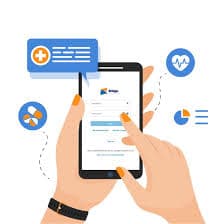
We designed and built a centralised electronic health records platform linking all 12 clinics on a single secure database with role-based access for doctors, nurses, and admin staff. The billing module integrates directly with M-Pesa and insurance claim APIs. A patient mobile app allows individuals to view their own records, book appointments, and receive prescription reminders.
Data security and patient privacy were the primary architecture constraints. All patient data is encrypted at rest and in transit, with a detailed audit log of every record access. We implemented strict role-based permissions so a receptionist at one branch cannot access clinical notes, and a doctor cannot access another patient's billing records. The insurance integration required custom connectors for three different insurance provider APIs, each with their own authentication and claims format. We built a normalisation layer that handles all three transparently. The mobile app was built in Flutter for iOS and Android simultaneously and was tested with actual patients at two pilot clinics before full rollout.
“The enterprise system they built for us streamlined our entire operations division and reduced average case processing time by 70 percent. More importantly, they trained our internal team and documented everything. We are not dependent on them to keep it running.”

Want Results
Like These?
Every project above started with a conversation. Tell us what you are trying to build and we will come back with an honest plan and a clear quote.